Vision and Strategy
VISION AND STRATEGY
Sanofex Limited is the parent holding of Pacific Offshore Mining Limited, the operator of exploration permit 57130 (offshore Waihi), which contains the world’s largest and highest grade Ilmenite mineral deposit. We intend to extract mineral and develop jobs and product in an environmentally conscionable manner using adaptive and sustainable management, with best available submersible technology.
Worldwide, countries are taking steps to decarbonise their economies by using wind, solar and battery technologies, with an end goal of reducing carbon-emitting fossil fuels from the energy mix. This first emerged in New Zealand as evidential implementation of policy with the Government’s ban on new offshore oil and gas exploration, with a long-term horizon of 30 years before the final existing permits lapse. This is consistent with the Government’s aspirations to meet Paris Agreement responsibilities for GHG and CO2 emission reductions by 2050.
In order for the transition to renewables to be meaningful and to achieve significant reductions in the Earth’s carbon footprint, mining will have to better mitigate its own environmental and social impacts. This global transition also has a trade-off: to cut emissions more minerals are needed to build renewable energy infrastructure. Advocates for renewable energy technology understand these impacts and between environmental opponents and capital developers there is a need to find a common ground. Sanofex Limited is committed to working with others to that end.
A regulatory framework can help governments meet their targets and manage the impacts of the next wave of mineral demand. Carbon Zero Minerals Limited (a division of the Sanofex Group) is ready to meet the requirements of the transition to a low-emissions Aotearoa New Zealand. The transition has already begun and for some this will entail considerable financial losses with stranded assets being forced out of the green/blue economy and ultimately written off.
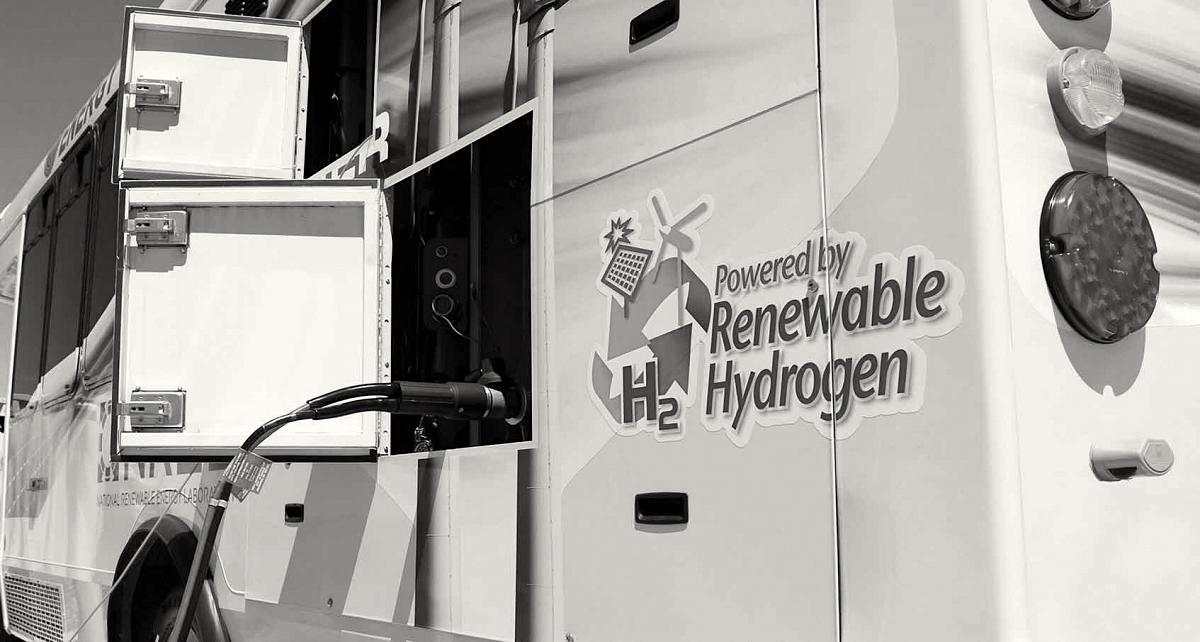
We look to achieve our ambitions by finding the common ground and by developing the New Zealand offshore minerals estate with safe environmental policy; It’s The Way We Operate. This includes new concepts in submersible (invisible), remotely operated, plume free, noise suppressed dredging technology that’s safe for marine life. Fossil-fuel free energy sources (Hydrogen) for our clean plant and the emission free production of metals, including Niobium for batteries, Iron and Titanium for wind turbines. Sanofex is an early adopter of Adaptive Management policy and looks to merge enterprise with community in the transition from fossil fuels to renewable energy, accepting that more minerals will be required to achieve this goal (Climate Smart Mining).
We are taking a cautious approach and seeking to avoid, remedy or mitigate adverse effects. We aim to start small, so that the effects on the environment can be monitored and will employ flexible decision making, adjusted in the face of uncertainties as outcomes become better understood. In time, we will deliver at scale and with zero emissions.
In Advancing the Future We Want firms that do not get on board and meet ESG (environment, social, and corporate governance) and SDGs (sustainable development goals), will be left behind. Environmental impact management, social justice and a responsible business approach is embedded in the DNA of our business and we are fully aligned with our sustainable development goals. Our sustainability strategy is our business strategy and in driving us Towards the Future We Want, its transforming our world.
The sustainable management of natural resources is an area of critical importance for humanity and the planet. The stories that we tell as a society about minerals, mining and miners are told in predominantly one dimension: they are stories about irresponsible companies running roughshod over the environment and communities, as well as artisanal and small-scale miners fuelling conflict, clearing forest and fouling rivers. This is understandable because these stories are based in fact. The publication of Transforming Our World: The 2030 Agenda for Sustainable Development, maps in detail how humanity can achieve the “Future We Want”. Recognising the sustainable management of natural resources is an area of “critical importance for humanity and the planet”.
Narratives (and counter narratives) play an important role in shaping sustainability transitions. When we are identifying which are the villains and heroes of our planet’s twin crises of environmental sustainability and global poverty, minerals are almost exclusively marked villain. Society quickly forgets the role that the mining of minerals has played in enabling our shelter, sustenance, transport, energy and communication. Minerals, according to this narrative, are an impediment to sustainable development, with their extraction negatively impacting the achievement of sustainable development goals.
The act of extraction (mining) has long been the focus of the minerals story, in a way that the role of the resource itself (minerals) has not. Our collective global discussion about agriculture, by comparison, is as much about food as it is about farming, and we can consider the current fundamental unsustainability of global food production alongside the criticality of food security and the urgency to address malnutrition. In the same way, the intersections between mining, minerals and development, in all their complexities, are crucial to advancing sustainable development.
Part of the challenge of integrating minerals into sustainable development is to offer clear concepts that include the totality of minerals contribution or that articulate the links to poverty reduction and human development. Another feature of the public discourse on minerals, when compared with other natural resources, is that access to mineral supply is almost never discussed from a human centred perspective.
A major part of the framing of natural resources in the SDGs relates to their fair and affordable access for development, with explicit or implicit reference in the goals and targets to food security, energy security and water security. In the case of agriculture, academics, practitioners and policymakers have been successful at expressing the clear and unequivocal link between the availability of food and human development, defining food security first as the availability of basic foodstuffs and later as existing “when all people, at all times, have physical, social and economic access to sufficient, safe and nutritious food that meets their dietary needs and food preferences for an active and healthy life”.
Mineral security exists when all people have sufficient and affordable access to the minerals necessary for human development, including for shelter, mobility, communication, energy and sustenance. Mineral security also implies access to the beneficiation and transformation necessary to turn minerals into usable commodities. Mineral insecurity is most acutely, though not exclusively, experienced in circumstances of poverty. The lack of access to the minerals necessary for development is both a contributing factor and a consequence of poverty.
We refer to mineral poverty as a state of mineral insecurity associated with poverty. Mineral poverty may limit access to vital infrastructure and services such as housing, transport and energy, and is interconnected with the other material dimensions of poverty. The issue of access to minerals for development has so far been framed through the lens of criticality. Critical minerals are essential for economic and national security (defence and industry) and are at risk of supply chain disruption, especially for an island such as New Zealand. They include the rare-earth elements, Ilmenite, Iron and Titanium contained within our permit tenements.
Governments worldwide (US, billions in IRA Act tax credits; AUS, $176m Critical Minerals Development Program) are supporting the development of critical minerals, with grants and subsidies to meet widening supply and demand deficits, by promoting critical mineral extraction.
The Sanofex project extracts minerals and produces products at under the tenth percentile for the cost of onshore based operations. It has the scale to drive down the cost of Green Hydrogen to under the cost of renewable energy, and bring forward the adoption of the Green Hydrogen era by fifteen years. It will produce Green Steel, which when adopted globally will reduce GHG emissions by 25%. The size of the project and the land based clean plant, will generate $500m to $3.5 billion USD in revenues annually and will require upwards of 300 staff. Titanium, represents 88% of the metals required for the electrolyser technology used for Green Hydrogen generation. The higher revenues represent full scale Titanium production.
To reiterate, we look to achieve our ambitions by finding the common ground and developing the New Zealand offshore minerals estate in an environmentally conscionable way. This includes, new concepts in dredging technology, renewable energy sources for our green hydrogen plant and emissions free production. ‘We are Carbon Zero’ and aim to introduce the new products of ‘Green Steel and Titanium’, with our ‘Green Hydrogen Advantage’ technology.
We cannot do this on our own but we can focus on leadership, both at home and internationally, guiding the way to a productive, sustainable and climate-resilient economy to benefit our just and inclusive society.